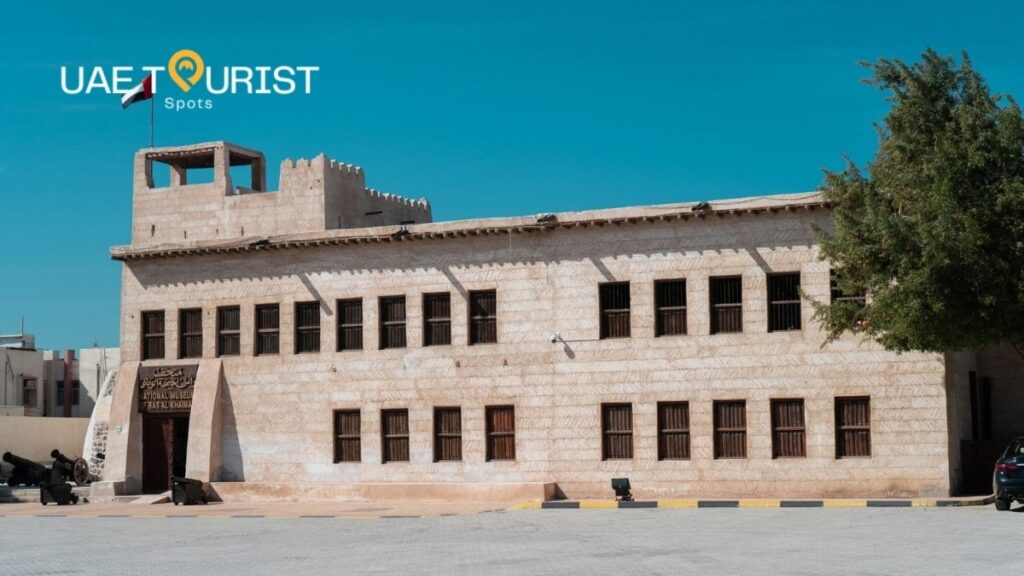
The National Museum of Ras Al Khaimah is a history museum inside Al Hisn Fort in the emirate’s Old Town. Its galleries cover archaeology, trade, pearl diving, date farming and local traditions, while the fort itself tells a story of changing uses, from ruling-family residence to police headquarters and museum. It is on Al Hisn Road. Published visitor information lists adult admission at AED 5 and children’s admission at AED 2. Hours are generally listed as Tuesday to Sunday, 8 a.m. to 6 p.m., but Friday schedules conflict, so call before making a Friday visit.
What makes the National Museum of Ras Al Khaimah worth visiting?
The museum brings together two parts of Ras Al Khaimah’s past: the objects inside and the historic building around them. Al Hisn Fort stands in the older part of the city, close to Mohammed bin Salim Mosque. Its foundations date to 1809–1819, and later building work followed the 1820 peace treaty with the British. The fort was attacked and destroyed at different points in its history, including by the Portuguese in 1621 and British forces in 1820.
The building later became the main residence of the Al Quwasim (also written Al Qasimi) ruling family. The family left in 1964, after which the fort served as police headquarters and a prison. The government converted it into a museum between 1984 and 1987. As you move through its rooms and central courtyard, the architecture helps explain how a defensive fort and residence fitted into the life of the old town.
What can you see inside the museum?
A welcome area introduces the emirate, its people, the fort and the Qawasim family’s role in trade. The museum’s permanent galleries include Madbasa, Julfar and Archaeology. Weaponry and Ethnography displays are semi-permanent, so their contents may change over time.
Madbasa gallery
A madbasa is a traditional date press used to extract juice from dates, which can be made into syrup. The gallery links date agriculture with food and everyday life in the Gulf. It is a useful stop for understanding why the date palm appears so often in accounts of local heritage: it supplied food and products as well as shaping farming practices.
Julfar gallery
Julfar was an important historic trading centre associated with Ras Al Khaimah. The gallery’s pottery helps visitors connect local craft with wider commercial routes. Julphar Ware, made in the emirate, has been found across the Gulf and western Indian Ocean region. Look at the range of vessel types on display, from small bowls and cups to cooking, water and storage pots; their forms show how pottery served ordinary household needs as well as trade.
Archaeology gallery
Archaeological objects give a longer view of settlement in the emirate, from its earliest communities through the late Islamic period. Many items in the museum were donated by the Quwasim family and Ras Al Khaimah residents, while others come from archaeological excavations and research. Rather than treating each object as an isolated treasure, notice what it suggests about materials, work, belief and exchange in the period it represents.
Ethnography and weaponry
The ethnographic displays focus on traditional Emirati life, including pearl diving, fishing, farming, date agriculture and architecture. The weaponry exhibition and related Qawasim displays add context on arms, silver, clothing and the fort’s turbulent history. These galleries can change as exhibitions are refreshed, so a repeat visitor may find a different selection from the last visit.
Who will enjoy the visit?
The museum suits visitors who want to understand Ras Al Khaimah beyond its beaches, resorts and mountain scenery. It is especially useful for local-history enthusiasts, families introducing children to archaeology and Emirati heritage, and travellers interested in how trade, farming and coastal life shaped the emirate. The displays are organised around specific subjects, making it easier to focus on one theme at a time.
Families can turn the visit into a simple observation activity: ask children to find an object linked to food, travel, work or protection, then discuss what it tells them about life before modern conveniences. School groups should confirm arrangements directly before visiting, since group booking details are not included in the standard visitor information.
Plan your visit
Opening hours and tickets
The published visitor schedule lists opening hours as 8 a.m. to 6 p.m., Tuesday to Sunday, with last entry at 5:30 p.m. The museum is closed on Mondays and the first day of Eid. Hours may change during Ramadan and UAE national holidays. A separate published schedule gives Friday hours as 2 p.m. to 8 p.m., so the Friday information is inconsistent. Call +971 233 9900 to confirm before travelling that day.
Tickets are sold at the museum entrance. The published prices are AED 5 for adults and AED 2 for children; prices can change, and the child age range is not specified. The visitor information does not say that advance booking is required. If you are arranging a school or larger group visit, call first to check any special requirements.
Location and directions
The address is Al Hisn Road, Old Town, Ras Al Khaimah. If travelling by taxi or private car, use the museum’s full name and street address when setting the destination. The published visitor details do not specify a dedicated parking area or a direct public transport stop, so confirm those details with your accommodation or the museum if they affect your plans. The fort is close to Mohammed bin Salim Mosque, making the surrounding Old Town a natural area to explore on the same outing.
Practical tips
- Check the weekday and seasonal schedule before setting out, especially on Fridays, during Ramadan, or around Eid and national holidays.
- Contact the museum in advance if you need step-free access, have mobility requirements, want to visit as a group, or need to know the photography policy. These details are not clearly published in the standard visitor information.
- Give yourself time to read the gallery labels and look at the fort’s courtyard and wind tower, rather than rushing from case to case. No official visit duration is published, so the time you need depends on how closely you explore each gallery.
- Wear comfortable shoes for moving through the historic building and its courtyard. Ask staff at the entrance which exhibitions are currently open if you want to focus on a particular subject.
Frequently asked questions
Is the National Museum of Ras Al Khaimah open on Fridays?
It may be, but published schedules disagree: one lists 8 a.m. to 6 p.m., while another lists 2 p.m. to 8 p.m. Call +971 233 9900 before visiting on Friday.
How much is admission?
The published rate is AED 5 for adults and AED 2 for children. Tickets are available at the entrance; confirm current prices before your visit if cost or age eligibility matters.
Do I need to book a ticket in advance?
The visitor information says tickets can be purchased at the entrance and does not list advance booking as a requirement. Groups should contact the museum ahead of time.
Is the museum suitable for children?
Yes. The museum is presented as suitable for families and school visits, with galleries about archaeology, traditional life, pearl diving and date farming. Parents can help children connect the objects with everyday needs and work.