Sheikh Zayed Grand Mosque is an active place of worship and one of Abu Dhabi’s most significant cultural landmarks. Entry is free, but visitors should reserve an online access pass, follow the mosque’s modest dress code and avoid public visiting restrictions around Friday prayers.
This Sheikh Zayed Grand Mosque Guide covers the practical information needed for a first visit, including current access times, booking, clothing rules, transport, photography, guided tours and facilities. Visitor information was checked on 13 August 2026, but schedules can change during Ramadan, Eid and other religious occasions.
Sheikh Zayed Grand Mosque at a Glance
| Visitor information | Details |
| Location | Abu Dhabi, United Arab Emirates |
| Admission | Free |
| Advance booking | Required or strongly advised through the official online booking system |
| Recommended visit length | Around 90 minutes to two hours |
| Guided tours | Free public cultural tours are available |
| Tour duration | Approximately 30–45 minutes |
| Dress code | Modest, loose-fitting and non-transparent clothing |
| Photography | Personal photography is permitted at designated photo stops |
| Parking | Free visitor parking is available |
| Accessibility | Wheelchairs, paved access routes and electric transport assistance are available |
| Children | Welcome under continuous adult supervision |
| Main contact number | +971 2 419 1919 |
Why the Mosque Is Important
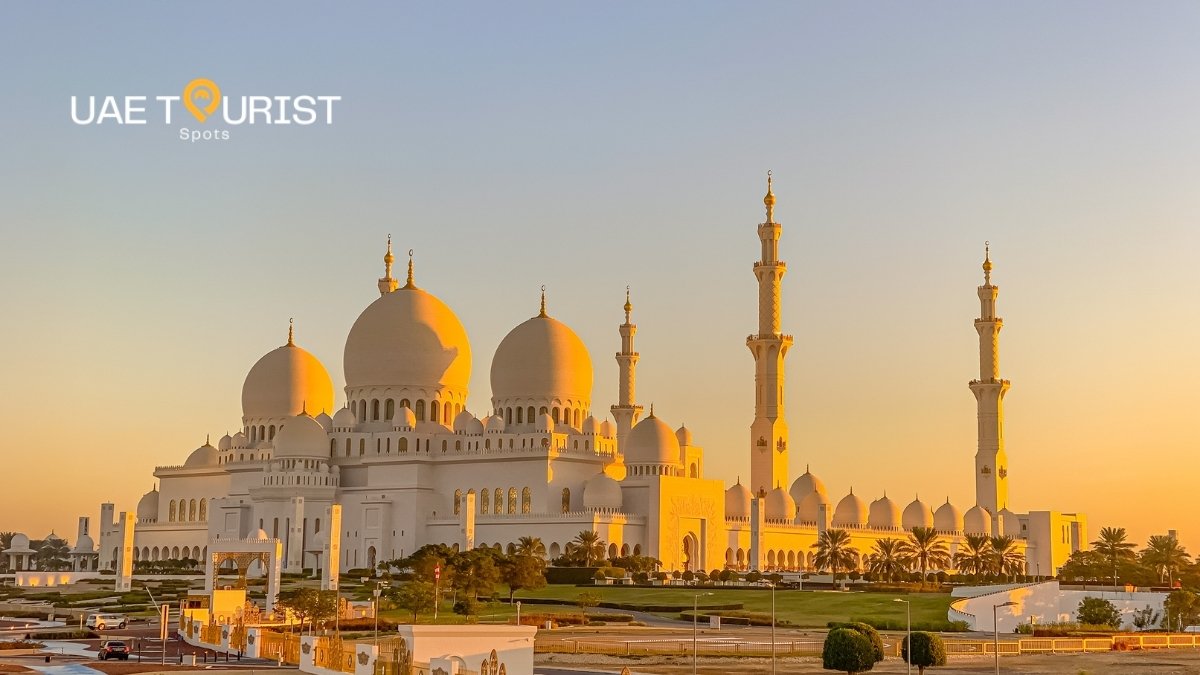
Sheikh Zayed Grand Mosque takes its name from Sheikh Zayed bin Sultan Al Nahyan, the founding father of the United Arab Emirates. Plans for the mosque developed during the late 1980s, construction began in November 1996, and its prayer halls opened for worship during Eid Al Adha in 2007.
The building was designed as both a major place of worship and a meeting point between cultures. Its architecture combines artistic influences, materials and craftsmanship from different parts of the Islamic world and beyond.
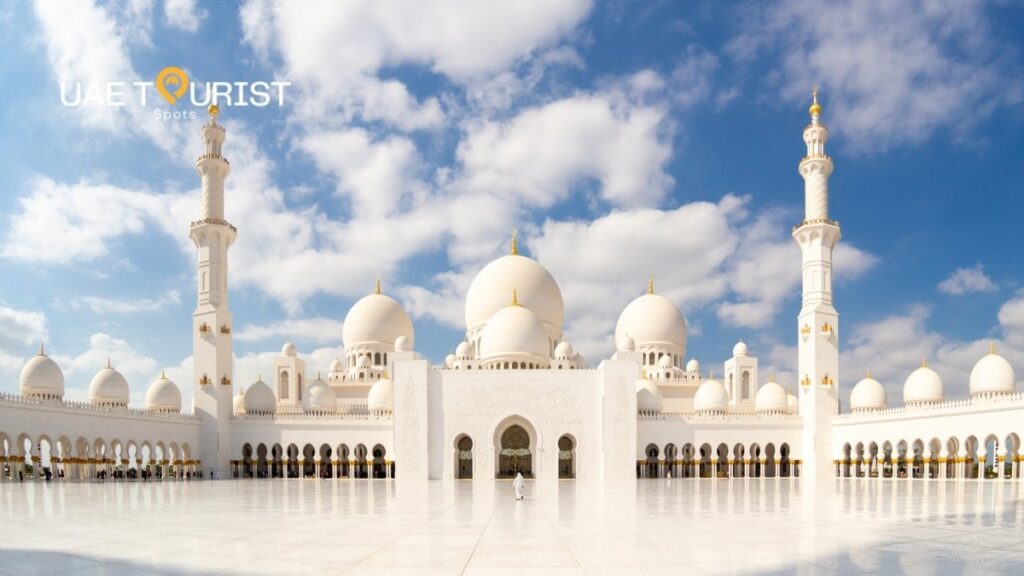
The mosque can accommodate approximately 50,000 worshippers. Its white marble, domes, minarets, floral artwork and reflective pools form the most recognizable part of the complex, but its religious purpose remains central. Visitors should therefore treat the building as a functioning mosque rather than simply a sightseeing attraction.
Is Sheikh Zayed Grand Mosque Free to Visit?
General admission to Sheikh Zayed Grand Mosque is free. Visitors do not need to buy a standard entrance ticket, and the public cultural tours organized by the Sheikh Zayed Grand Mosque Centre are also complimentary.
You should still reserve an online access pass before arriving. The official booking system requests information such as your visit date, preferred time, nationality, place of residence and the number of people in your group.
Bookings normally open no more than one month before the selected date.
Optional Service Charges
The mosque’s official service guide currently lists several optional services:
| Optional service | Listed charge |
| Fast Track | AED 20 per person |
| Seamless Shuttle | AED 5 per person |
| Small-luggage cloakroom | AED 30 per item |
| Medium-luggage cloakroom | AED 40 per item |
| Large-luggage cloakroom | AED 50 per item |
People of Determination, visitors aged 60 or older and children under three are listed as exempt from the Fast Track fee. These charges are in UAE dirhams and may change, so confirm them when making a reservation.
Opening Hours and Last Admission
The official website presently displays a minor difference between its live booking calendar and visitor FAQ. The booking system shows available entry times, while the FAQ separately states the building’s closing time.
| Day | Current visitor access information |
| Saturday to Thursday | Booking slots from 9:00 AM to 8:30 PM; the FAQ lists 9:00 PM as closing time and 8:30 PM as last admission |
| Friday morning | 9:00 AM to 11:30 AM |
| Friday afternoon and evening | The booking calendar offers slots from 2:30 PM; the FAQ says public visiting resumes at 3:00 PM, with last admission at 8:30 PM |
On Fridays, public access is interrupted for the main congregational prayer. Select an available online time and follow the schedule printed on your confirmation rather than relying on an older travel article.
The mosque publishes separate visiting hours during Ramadan, Eid and other religious occasions. During these periods, evening access, guided-tour times and Friday arrangements may change at short notice.
Sura Night Tours
The Sheikh Zayed Grand Mosque Centre also operates Sura tours outside standard public visiting hours. These tours offer a different view of the mosque and may provide insight into its nightly care and maintenance.
Sura is a separate bookable experience rather than ordinary late-night entry. Its timetable has changed for special occasions, so check availability through the official Sura reservation page.
How to Book Your Visit
Booking an access pass takes only a few steps:
- Open the individual booking section on the official Sheikh Zayed Grand Mosque Centre website.
- Select the number of visitors in your group.
- Choose an available date and entry time.
- Enter the requested contact and visitor information.
- Review the visitor code of conduct.
- Complete the email verification process if requested.
- Save the access pass or confirmation on your phone.
Book each person in your party, including children. Arrive before the reserved time to allow for parking, walking through the visitor centre, security screening and dress-code checks.
If the online system does not display dates more than a month ahead, wait until the booking window opens rather than assuming the mosque is fully reserved.
What to Wear at Sheikh Zayed Grand Mosque
The dress code applies to every visitor. Clothing should be loose, opaque and respectful enough for entry into an active religious space.
Dress Code for Women
Women should wear:
- Loose-fitting clothing extending to the ankles
- Sleeves reaching the wrists
- A scarf that completely covers the hair
- Non-transparent clothing that does not reveal the body’s shape
A separate abaya is not necessarily required when a visitor’s own outfit fully meets the official clothing rules. However, a long, loose abaya can make compliance simpler.
Do not assume suitable clothing will be lent at the entrance. Bring your own headscarf and wear an outfit that already follows the rules.
Dress Code for Men
Long trousers and a modest shirt are the safest choices for men. Avoid:
- Shorts
- Sleeveless shirts
- Tight-fitting clothing
- Transparent material
- Clothing with inappropriate images or slogans
The official visitor code also asks guests to avoid overly bright clothing, heavy makeup and excessive jewellery. Final admission remains subject to the assessment of mosque staff.
Visitor Rules and Respectful Behaviour
The mosque’s visitor code is intended to protect both its religious atmosphere and its delicate interior.
Visitors should:
- Speak quietly and place mobile phones on silent mode.
- Stay on the marked visitor route.
- Follow directions given by staff and security personnel.
- Keep children nearby and supervised.
- Avoid public displays of affection.
- Use only the approved photography areas.
- Avoid touching decorative surfaces and religious objects.
- Keep food and drinks outside restricted mosque areas.
- Avoid smoking anywhere on the mosque grounds.
- Be prepared to remove footwear where instructed before entering carpeted prayer spaces.
Prohibited items include weapons, sharp objects, fireworks, electronic cigarettes, lighters, loudspeakers and laser devices. Flags, political material, masks, slogans and certain toys or stuffed figures may also be refused under the published code.
Security inspections apply before entry. Travellers arriving with luggage should use the cloakroom instead of carrying large bags through the visitor route.
Photography and Video Rules
Personal photographs and videos taken with ordinary, non-professional equipment are permitted at designated photo stops.
Commercial shoots, media work and professional productions require prior permission from the Sheikh Zayed Grand Mosque Centre. Professional equipment should not be brought without the necessary permit.
Visitors should also avoid:
- Lying or sitting in inappropriate positions for photographs
- Poses that disregard the mosque’s religious character
- Photographing worshippers intrusively
- Leaving the marked route to reach a particular angle
- Flying drones or other aerial devices without authorization
The best photography opportunities are usually found around the courtyard, domes, colonnades and reflective pools. Staff may close or redirect photography areas during prayers, official visits or maintenance.
How to Reach Sheikh Zayed Grand Mosque
The mosque stands near the entrance to Abu Dhabi Island, between the Maqta, Mussafah and Sheikh Zayed bridges. Drivers are directed to the visitor facilities through Al Salam Gate 6.
By Taxi
A metered taxi is usually the simplest choice for tourists staying in Abu Dhabi. Taxis can be hailed on the street, found at hotels and shopping centres, or booked through the Abu Dhabi Taxi application.
Abu Dhabi Mobility currently lists the following standard silver-taxi rates:
| Fare component | Day | Night |
| Flag fall | AED 5 | AED 5.50 |
| Charge per kilometre | AED 1.82 | AED 1.82 |
| Minimum trip fare | AED 12 | AED 12 |
| App booking fee | AED 4 | AED 5 |
Day fares apply from 6:00 AM to 10:00 PM, while night fares apply from 10:00 PM to 6:00 AM. Airport taxis begin with a higher AED 20 flag fall. The final cost depends on the starting point, distance, waiting time and traffic.
A designated taxi area is available at the mosque during operating hours.
By Public Bus
Abu Dhabi’s public bus network has stops near the mosque. Route numbers and schedules can change, so plan the trip using Abu Dhabi Mobility’s Darbi journey planner or current timetable.
A Hafilat smart card is required for regular Abu Dhabi public buses. It must be purchased and topped up before boarding because cash and ordinary bank-card payments are not accepted on the bus.
Allow additional time after leaving the bus because the mosque complex is large and the visitor entrance may not be immediately beside the stop.
By Car
Free parking is available for visitors and worshippers. Follow the mosque signs and use the designated southern parking areas unless staff direct you elsewhere.
Traffic can increase around Friday prayers, sunset, Ramadan evenings and major Islamic holidays. Arriving early is particularly important during these periods.
From Dubai
Travellers can drive, book a private transfer or use an intercity bus from Dubai to Abu Dhabi. Dubai’s RTA currently operates the E100 service from Al Ghubaiba and the E101 service from Ibn Battuta to Abu Dhabi’s central bus station.
From the Abu Dhabi bus station, continue to the mosque by taxi or local public bus. Check the RTA S’hail service before travelling because intercity routes can be suspended or adjusted during public holidays and major events.
What to See Inside the Mosque
The Main Courtyard
The courtyard is known for its large floral marble mosaic. The coloured botanical designs contrast with the surrounding white stone and connect visually with the floral patterns used throughout the complex.
Visitors are normally directed along the edges rather than across the centre of the courtyard. Access may be further restricted during hot weather, prayers or special events.
Domes and Minarets
The mosque has 82 domes and four minarets. Their design brings together different architectural traditions while maintaining a coherent white-marble appearance.
Look carefully at the variations in dome size, calligraphy and decoration. The smaller domes along the arcades help frame the main dome above the prayer hall.
Reflective Pools
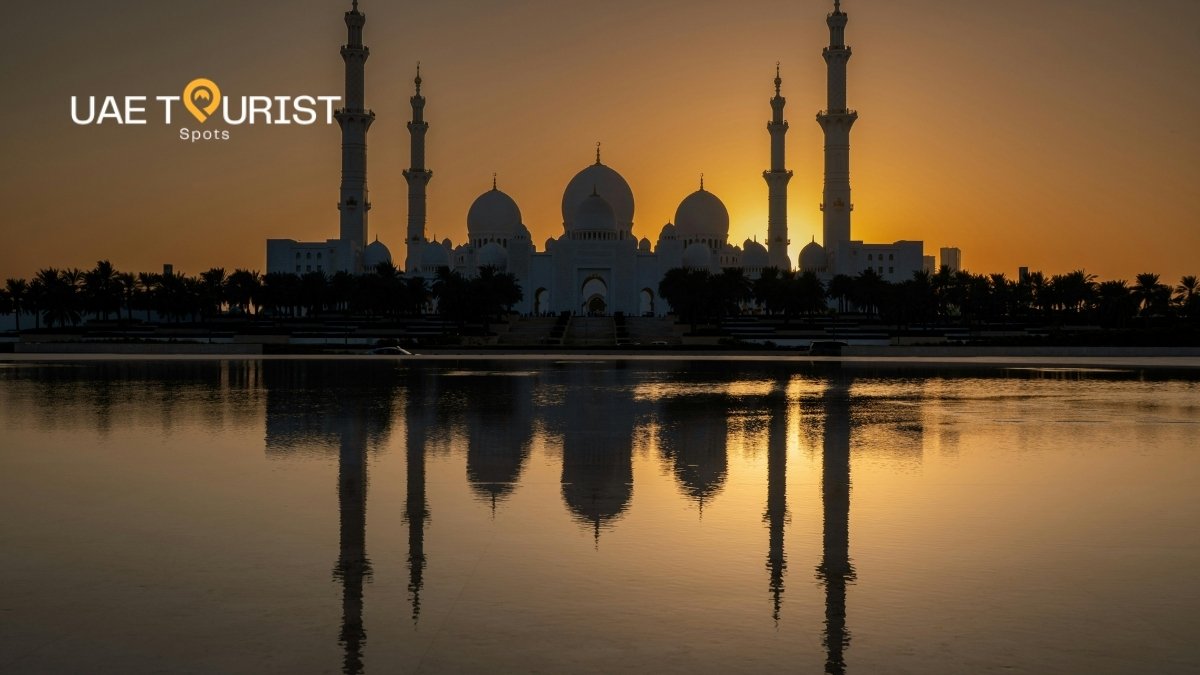
The pools beside the arcades mirror the columns and domes, particularly when the air is still. After sunset, the combination of water, white marble and exterior lighting creates a noticeably different view from the daytime appearance.
The Main Prayer Hall Carpet
The main prayer hall contains a hand-knotted carpet measuring approximately 5,400 square metres. Around 1,200 artisans worked on it, and its final weight is listed as 35 tonnes.
Raised lines in the carpet help worshippers form straight rows during prayer. The medallion designs also align visually with the chandeliers above.
The Chandeliers
Seven chandeliers are installed across the mosque. The three large chandeliers in the main prayer hall draw inspiration from the date palm, an important symbol in Emirati culture.
The largest measures approximately 12 metres across and 15.5 metres in height. Its design uses coloured glass and crystal details alongside gilded metalwork.
Calligraphy and the Qibla Wall
Arabic calligraphy appears throughout the building in several scripts. The qibla wall indicates the direction of Makkah, toward which Muslims face during prayer.
The wall incorporates the 99 names or attributes of Allah in carefully arranged calligraphy. Visitors should observe this section quietly, particularly when worshippers are present.
Free Guided Cultural Tours
A guided cultural tour is one of the most useful ways to understand the building. Official specialists explain the mosque’s architecture, construction, religious function and cultural message.
The currently published schedule lists tours at:
- 11:00 AM, 1:00 PM and 5:00 PM on regular visiting days
- 11:00 AM and 5:00 PM on Fridays
Public tours usually last 30–45 minutes and are offered in Arabic and English. Arrive at the tour starting point on the east side approximately 15 minutes early.
Tour times may be revised during religious holidays or special events. If joining a tour is important to your itinerary, confirm the schedule on the day of your visit.
Museum and Visitor Experiences
The wider complex includes the Light & Peace Museum and the Diya immersive experience within the Dome of Peace.
The museum explores Islamic civilization, artistic traditions, scientific contributions and themes of coexistence. Diya uses a 360-degree sound-and-light presentation to introduce the landscapes, heritage and architectural identity of the UAE.
The official booking system displayed AED 0 for these experiences when checked, but the Centre has previously described complimentary admission as temporary. Check the reservation page for current charges before including them in your itinerary.
Best Time to Visit
Early morning and the period around sunset are the most practical choices for many visitors.
An early visit offers cooler outdoor conditions for much of the year and leaves the rest of the day open for other Abu Dhabi attractions. Sunset provides changing natural light, followed by the mosque’s evening illumination.
From roughly May to September, outdoor areas can be extremely hot during the middle of the day. October through April generally provides more comfortable conditions for walking around the exterior.
Sunset is visually rewarding but can also attract more visitors. Reserve an entry time in advance and arrive early enough to see the building before and after the light changes.
Avoid planning a first visit close to Friday midday prayers. Ramadan and Eid can provide a meaningful religious atmosphere, but visitor schedules, traffic and access arrangements are more likely to change.
Facilities and Accessibility
The complex provides:
- Free visitor parking
- Wheelchairs
- Paved accessible routes
- Electric transport assistance around the grounds
- Male and female toilets
- A secure paid cloakroom
- Visitor information services
- Food, drink and retail outlets at Souq Al Jami
Wheelchairs can be requested from security personnel. Accessible taxis are also available in Abu Dhabi, although advance booking is sensible when a specially adapted vehicle is needed.
The visitor journey involves a considerable amount of walking. Elderly visitors, families with young children and travellers with limited mobility should allow extra time and request assistance when they arrive.
Food and Refreshments
Food and drinks should not be taken into restricted mosque areas. Visitors who need a meal or refreshment can use Souq Al Jami, the retail and dining area within the wider mosque complex.
The souq includes restaurants, cafés, shops and souvenir outlets. Its operating times may differ from mosque visitor hours, especially during Ramadan and Eid.
Visiting with Children
Children are welcome, but parents and guardians must supervise them continuously. The mosque is not a suitable place for running, shouting or climbing on architectural features.
Explain the basic rules before entering, keep younger children close during security checks and allow breaks if the group is walking in hot weather. Souq Al Jami can provide a useful rest stop after completing the mosque route.
A Simple Two-Hour Itinerary
A straightforward visit can be planned as follows:
- Arrival and entry formalities: 20–30 minutes
Park or leave the taxi, walk through the visitor centre, complete security checks and confirm that everyone meets the dress code. - Courtyard and exterior route: 20–30 minutes
View the domes, floral marble work, arcades and reflective pools. - Prayer hall and interior details: 30–45 minutes
See the carpet, chandeliers, calligraphy and qibla wall while following the marked route. - Photography and final walk: 15–20 minutes
Use the designated photo stops and revisit the exterior viewpoints. - Souq Al Jami or museum: optional additional hour
Add time for refreshments, shopping, the Light & Peace Museum or Diya experience.
If joining a guided cultural tour, allow approximately two and a half hours for the entire visit.
Nearby Places to Add to Your Itinerary
Wahat Al Karama
Wahat Al Karama is a national memorial located opposite the mosque. Its viewing area provides a broader perspective across the water toward the mosque and can be combined with the same visit.
Opening hours and access arrangements should be confirmed separately.
Al Qana
Al Qana is a nearby waterfront dining and entertainment district. It is a practical place for a meal after an evening mosque visit, especially if you want to remain in the same general part of Abu Dhabi.
Qaryat Al Beri
The Qaryat Al Beri area includes hotels, restaurants and waterfront spaces within a short drive of the mosque. It can be convenient for travellers staying outside central Abu Dhabi or planning a slower evening itinerary.
Essential Planning Checklist
Before leaving for the mosque:
- Reserve an official access pass.
- Recheck the day’s visitor hours.
- Avoid the Friday prayer closure.
- Wear compliant clothing before arrival.
- Bring a suitable headscarf if you are a woman.
- Save the booking confirmation on your phone.
- Carry a topped-up Hafilat card if travelling by bus.
- Leave professional photography equipment behind unless authorized.
- Allow time for security and walking through the complex.
- Check special arrangements during Ramadan, Eid and public holidays.
Frequently Asked Questions
Do non-Muslims need permission to enter Sheikh Zayed Grand Mosque?
Non-Muslim visitors are welcome during public visiting hours. They must reserve an access pass, follow the visitor route and comply with the mosque’s dress and behaviour rules.
Do I need a ticket for Sheikh Zayed Grand Mosque?
General admission is free, but visitors should obtain an online access pass. Optional Fast Track, shuttle and cloakroom services may have separate charges.
Can I visit without joining a tour?
Yes. Visitors may follow the designated route independently. Free official tours are available for those who want additional information about the architecture and Islamic culture.
Is an abaya compulsory for women?
The official dress code allows any women’s clothing that is loose, opaque, ankle-length and sleeved to the wrists. Hair must be fully covered. An abaya is a practical option, but compliant personal clothing can also meet the published requirements.
Can men wear shorts?
Shorts are unlikely to meet the mosque’s dress requirements. Men should wear long trousers and avoid sleeveless, tight or transparent shirts.
Can I take photographs inside?
Personal photography is permitted at designated stops using non-professional equipment. Commercial work, media filming and professional photography require prior authorization.
Is Sheikh Zayed Grand Mosque open on Friday?
Yes, but public visiting is interrupted for Friday prayers. Morning access ends at 11:30 AM. The live booking system currently displays afternoon slots from 2:30 PM, while the FAQ says visits resume at 3:00 PM. Follow the time confirmed on your reservation.
How much time should I allow?
Allow around 90 minutes to two hours for an independent visit. Plan approximately two and a half hours if you want to join a guided tour or spend more time taking photographs.
Can I bring luggage during an airport stopover?
A paid cloakroom is available for small, medium and large luggage. Because availability and charges can change, reserve the service where possible and avoid arriving with more luggage than necessary.
Is the mosque wheelchair accessible?
The mosque provides wheelchairs, paved access routes and electric transport assistance. Visitors needing additional help should speak to security or visitor-services staff on arrival.